Choosing between a control valve, a regulator, and a relief valve is not just a matter of price; it is a choice among dynamic process management, fixed-set-point maintenance, and emergency overpressure protection.
In high-stakes Malaysian operations, selecting the wrong device can lead to “droop” issues, costly downtime, or catastrophic safety failures.
For Oil and Gas (O&G) and Power industry professionals, these devices may appear to perform similar functions, but confusing one for another is far from a minor technical error. Pressure fluctuations go unmanaged, safety risks compound, and process stability suffers.
This article cuts through the confusion, explaining the definitions and functions of each device and how to select and apply the right one for your operation.
Table of Contents
Key Takeaways
- A control valve is the only device capable of dynamic, closed-loop process control; specify one when setpoints must be adjusted remotely via DCS or PLC.
- A pressure regulator maintains stable downstream pressure without external power, making it the preferred choice for remote or unmanned sites.
- A safety relief valve (SRV) is mandatory on every pressurised system. Under Malaysia’s OSHA (Amendment) Act 2022, a regulator cannot legally replace it.
- Sizing to pipe diameter rather than the flow coefficient (Cv) is the most common cause of unstable valve performance.
- In sour gas or severe service, all wetted components must comply with NACE MR0175 / ISO 15156 before procurement.
What Are Control Valves, Relief Valves & Regulators?
Control Valves
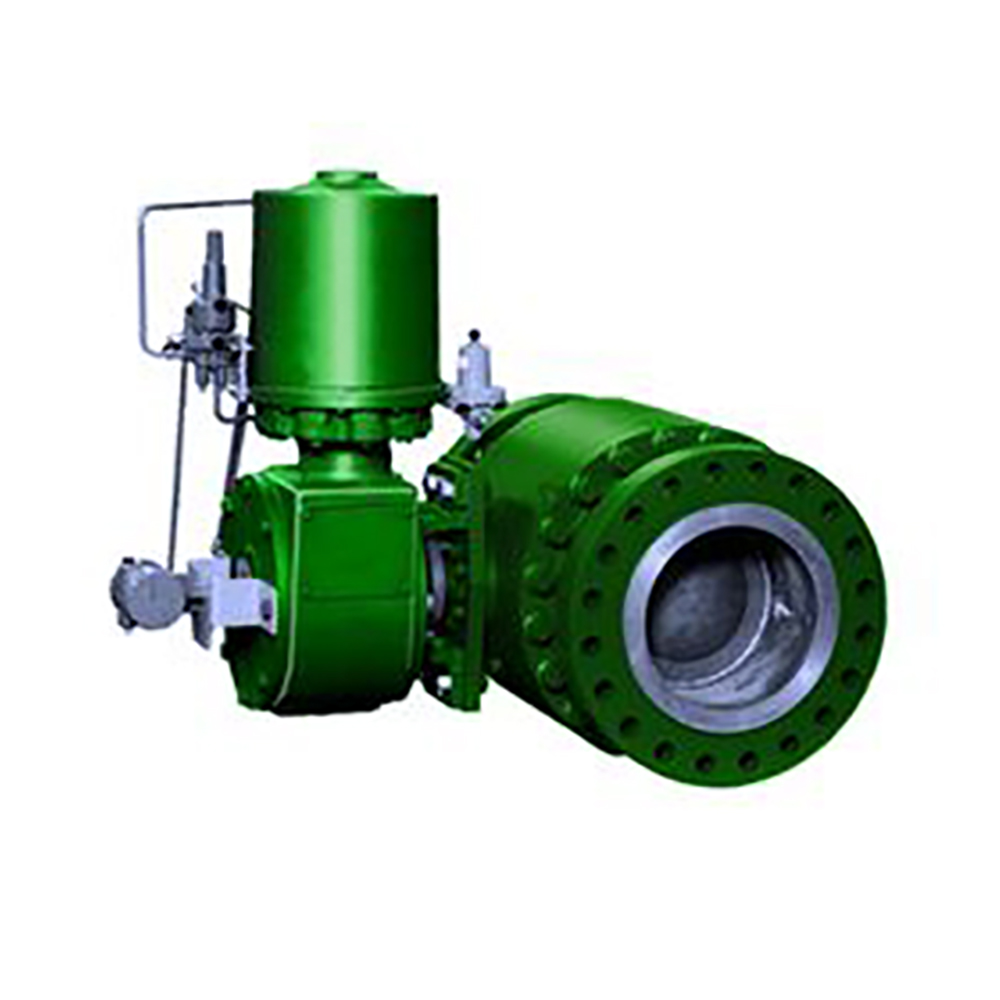
A control valve is a power-operated device that regulates flow and pressure across a wide range of process conditions. It operates via an external control loop, usually a Distributed Control System (DCS) or Programmable Logic Controller (PLC), allowing its setpoints to be adjusted remotely. It is the only device in this group capable of dynamic, closed-loop process control.
Safety Relief Valves
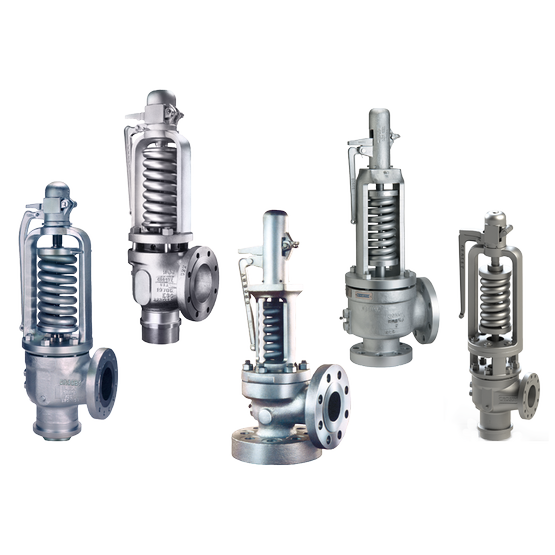
A safety relief valve (SRV) is a mechanical device that acts as both a safety and relief valve. For compressible fluids such as gas, steam, or vapour, it opens suddenly with a “pop” when the system pressure exceeds a set point.
For incompressible fluids such as liquids, it opens gradually and proportionally to overpressure. An SRV remains completely inactive under normal operating conditions and functions strictly as a last resort.
Pressure Regulator
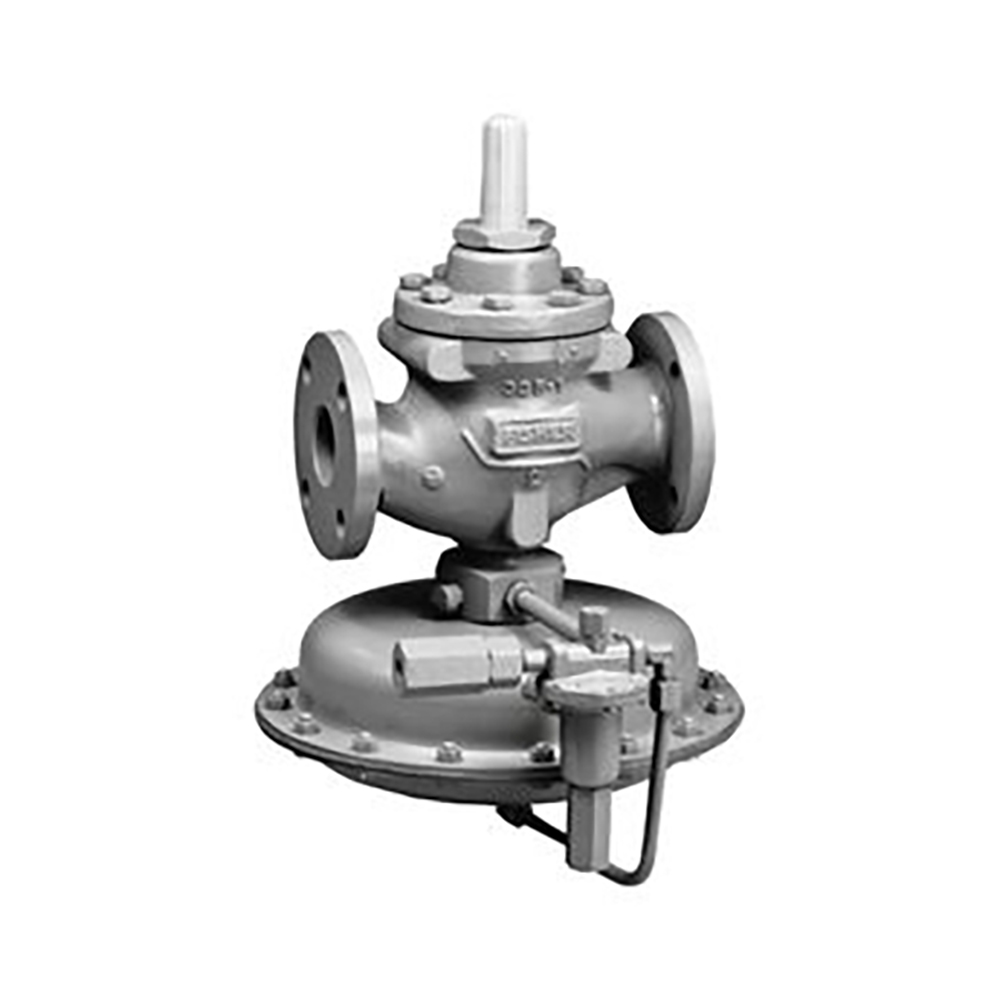
A pressure regulator lowers a high inlet pressure to a steady outlet pressure, maintaining it despite changes in inlet pressure or flow. Powered by the process fluid, it combines a valve, an actuator, a controller, and a pressure transmitter into a single device.
Pressure-reducing regulators control downstream pressure, while back-pressure regulators maintain upstream pressure by opening to prevent excess pressure.
Comparison Table for The Devices
Aspects | Control Valve | Safety Relief Valve | Pressure Regulator |
Primary function | Dynamic flow and pressure regulation | Emergency overpressure protection | Fixed downstream pressure maintenance |
Operating state | Continuously modulating | Inactive until overpressure event | Continuously self-regulating |
Control requirement | Signal from DCS/PLC | Pressure reaching mechanical set point | Change in downstream pressure or flow |
Power source | External (instrument air or electric) | None; fully mechanical | None; powered by process fluid |
Set pressure | Remotely adjustable | Fixed mechanical set point | Manually adjustable; not remote |
Precision | High; smart positioner enables tight control | Not available; activates at fixed point only | Moderate; subject to droop |
Functions of Control Valves, Relief Valves & Regulators
Each valve type manages pressure or flow, but they operate under different principles and serve different functions within a plant:
Control Valves
A control valve regulates flow or pressure under changing process conditions by continuously adjusting its position to maintain a target setpoint. It operates in a modulating mode rather than simply opening or closing.
In most industrial systems, control valves operate within a closed control loop. A distributed control system (DCS) or programmable logic controller (PLC) monitors a process variable and sends a signal to position the valve accordingly. If pressure rises above the setpoint, the valve closes slightly; if pressure drops, it opens.
Control can be implemented in two ways:
- Indirect control: A DCS or PLC reads the process variable and sends a signal to the valve actuator.
- Direct control: The valve responds directly to the process variable without an intermediate controller.
The selected control method determines actuator type, positioner configuration, and signal interface during specification.
Safety Relief Valves (SRV)
Safety relief valves are designed to protect pressurised equipment from unsafe pressure buildup. They do not regulate normal operating pressure; instead, they act as an emergency safeguard.
A safety relief valve prevents dangerous overpressure conditions that could damage equipment or cause explosions. It operates entirely by mechanical action and does not require external power or a control system.
When system pressure reaches a predetermined setpoint, the valve opens to discharge excess pressure. Once pressure returns to a safe level, the spring mechanism automatically reseats the valve.
Safety relief valves function as the final protection layer in pressurised systems such as vessels, boilers, pipelines, and compressor installations.
Pressure Regulators
Pressure regulators provide automatic pressure control without relying on electronic instrumentation or external power sources. They are widely used where a stable pressure must be maintained, but full control system integration is unnecessary.
A pressure regulator maintains a stable outlet or upstream pressure by automatically adjusting internal flow in response to pressure changes. Unlike control valves, regulators operate independently of a DCS or PLC.
Two main functional configurations are used:
- Pressure-reducing regulators: Maintain a constant downstream pressure
- Back-pressure regulators: Protect upstream equipment by relieving excess pressure
An important performance characteristic is droop, or offset. As flow demand increases, controlled pressure falls slightly below the setpoint.
Direct-operated regulators generally experience about 10 to 20% droop, while pilot-operated regulators can reduce droop to 1 to 5%, providing more accurate pressure control.
Types of Control Valves, Relief Valves & Regulators
Selecting the appropriate valve design ensures reliable operation, accurate control, and long service life under the expected process conditions. Below are the common valve designs used in industrial applications:
Control Valves
- Globe valves and angle valves: Use a linear motion to move a plug into or out of the seat. Globe valves are the standard choice for tight throttling control and precise modulation.
Angle valves work identically but direct flow at 90°, making them ideal for high-pressure drops, flashing, cavitation, or erosive service where a globe body could be damaged.
Paired with a sensitive diaphragm actuator and a smart positioner, both offer excellent resolution and precise flow control.
- Rotary valves: Use a rotating element to regulate flow; ideal for high flow, low-pressure drop, and compact installations.
Transwater offers four rotary control valve types, each with distinct functions: ball valves, butterfly valves, eccentric plug valves, and segmented ball valves.
A splined shaft-to-stem connection with low seal friction minimises backlash and ensures control accuracy across all rotary types.
- Three-way valves: Globe or ball-body valves configured with three ports: one inlet and two outlets, or two inlets and one outlet to divert or mix process streams without requiring two separate valves.
They are commonly used in heat exchanger bypass, blending, and distribution applications where flow direction must be switched under control system command.
- Steam conditioning and desuperheating valves: Reduce both steam pressure and temperature simultaneously. They replace separate pressure-reducing stations and desuperheaters with a compact solution.
These valves are used in combined heat and power (CHP) plants, turbine bypass systems, and steam letdown stations.
Going deeper on smart asset control? Read on How Emerson Automation Solutions Streamlines Asset Monitoring and Control to know more on digital valve controllers and asset management platforms that reduce unplanned downtime in process facilities.
Pressure Regulator
- Pressure-reducing regulators: Lower high inlet pressure to a steady downstream pressure, automatically adjusting for fluctuations in inlet pressure or flow demand.
Direct-operated types suit small pressure drops and stable inlets; pilot-operated types offer tighter accuracy, reducing droop from 10 to 20% to 1 to 5%.
- Back pressure regulators: Protect upstream vessels, separators, and supply headers by opening to relieve flow when upstream pressure exceeds the setpoint; guarding against overpressure from excessive flow or supply surges.
Common Applications: Fuel gas conditioning and pressure letdown for burners or instruments; separator blanketing without DCS; remote wellhead DP control without air or power; plantwide instrument air and utility gas distribution.
Key Selection Factors
Why Proper Design and Maintenance Matter
1. Dynamic Process Control → Control Valve
Specify a control valve when the process requires continuous modulation of flow or pressure under a control loop.
Standard indicators include:
- Setpoints that must be adjusted from a DCS or PLC
- Rapid response to changing process variables
- Integration with plant instrumentation and asset monitoring systems
These conditions are common in applications such as separator pressure control, compressor anti-surge loops, chemical dosing systems, and pH-sensitive process control, where tight throttling accuracy is required.
If the process variable must be actively managed by a control system, a regulator alone cannot provide sufficient control.
2. Fixed Pressure Reduction → Pressure Regulator
Specify a pressure regulator when the goal is to maintain a stable outlet pressure without remote control or instrumentation.
Regulators are generally selected for:
- Fuel gas supply systems
- Gas distribution skids
- Utility pressure reduction stations
- Remote wellheads or unmanned facilities
Because regulators operate mechanically and do not require instrument air or electrical power, they are often the most reliable solution in isolated installations.
For applications requiring tighter pressure stability at higher flow variation, pilot-operated designs are usually preferred over direct-operated regulators.
3. High Energy or Severe Service Conditions → Control Valve with Specialised Trim
When the process involves high pressure drop, flashing liquids, cavitation risk, or corrosive media, standard regulators or conventional valve trim may not provide sufficient durability.
In these cases, engineers generally specify control valves with severe-service trim, such as multi-stage pressure-reduction or anti-cavitation designs.
For sour gas applications containing wet H₂S, materials must comply with
NACE MR0175 / ISO 15156 to prevent sulphide stress cracking. This requirement applies to all wetted and stressed components, including trim, springs, and bonnet components.
4. Overpressure Protection → Safety Relief Valve
Regardless of the primary control device used, every pressurised system requires a safety relief valve as the final protection against overpressure.
Safety relief valves operate independently of control systems and protect equipment in scenarios such as:
- Control valve failure
- Blocked outlet conditions
- Thermal expansion
- Fire exposure
In Malaysia, all Unfired Pressure Vessels (UPV) must have relief systems sized and certified to API 520, 521, or ASME Section VIII.
Under the OSHA (Amendment) Act 2022, compliance is enforced by DOSH (JKKP), requiring a valid Design Approval (PMT Number) for legal operation.
At-a-Glance Comparison
Process Requirement | Recommended Device | Applications | Purpose |
Continuous flow or pressure control with remote setpoint changes | Control Valve | Separator pressure control, compressor anti-surge, flow control loops, pH-sensitive processes | Integrates with DCS or PLC and enables precise closed-loop process control |
Stable downstream pressure at a fixed setpoint | Pressure Regulator | Gas distribution skids, fuel gas supply, remote wellheads | Self-operated device that maintains downstream pressure without external power |
High pressure drop, cavitation, flashing, or corrosive service | Control Valve with Severe Service Trim | High-pressure gas letdown, sour gas systems, flashing liquid service | Specialised trim reduces cavitation, erosion, and material degradation |
Protection against overpressure events | Safety Relief Valve (SRV) | Pressure vessels, separators, pipelines, boilers | Automatically relieves excess pressure to prevent equipment failure |
Common Engineering Mistakes and How to Avoid Them
Even experienced engineers make device selection and sizing errors that compromise process control, safety, and equipment lifespan. These four mistakes account for the majority of preventable failures in Malaysian O&G and Power operations.
1. Sizing for the Pipe, Not the Process
Choosing a device based on pipe diameter almost always leads to oversizing, causing instability regardless of how well it is installed.
- Control valves: Oversizing increases valve gain and can cause limit cycles, causing the valve to oscillate around the setpoint.
- Regulators: An oversized unit hunts, leading to unstable downstream pressure.
- Relief valves: The common mistake is undersizing; using design pressure instead of relieving pressure, leaving systems unprotected when it matters most.
Solution: Size to the flow coefficient (Cv) using actual process conditions; fluid properties, flow rates, and differential pressure across the operating range.
Never use pipe diameter as a shortcut, or add arbitrary safety factors to maximum-flow calculations.
2. Treating a Regulator as a Safety Device
A pressure regulator is not a certified safety device and cannot replace a safety relief valve(SRV). In Malaysia, this is not only an engineering mistake but also a statutory violation.
Regulators keep downstream pressure stable during normal operations. They are not designed or certified for emergency relief, and have no fail-safe to prevent catastrophic failure.
Solution: An SRV must always be installed alongside the regulator. Under OSHA 1994 (DOSH/JKKP), pressure relief devices are required on unfired pressure vessels and a regulator alone does not meet this requirement.
3. Over-specifying the Wrong Device
Specifying a full control valve assembly for a duty that only needs fixed downstream pressure adds cost and failure points without improving performance.
- Control valves: Best when the process needs dynamic adjustment, remote setpoint changes, or DCS integration. Using one by default for simple pressure reduction often overcomplicates the system.
- Regulators: Best for fixed, stable downstream pressure such as fuel gas, instrument air, or remote wellhead service. They need no instrument air, external power, or control loop, and respond quickly in steady service.
- Shutoff vs throttling: Expecting one control valve to deliver both precise throttling and tight shutoff usually compromises both duties. These functions are best handled by separate devices.
Solution: Match the device to the control objective. Use a regulator where only stable downstream pressure is needed, and reserve control valves for applications requiring active modulation or remote control.
Separate throttling and shutoff duties where tight isolation is vital.
4. Ignoring Local Conditions and Compliance Requirements
Selecting international standards alone is not enough in Malaysian O&G and Power, where local conditions and compliance rules also affect fit-for-service.
- Environment: Heat, humidity, and coastal exposure accelerate corrosion and wear. Outdoor installations should use at least IP65 enclosures, with environmental requirements confirmed early.
- Emissions: Standard pneumatic positioners vent methane, while digital controllers reduce emissions and support ESG reporting. This matters where methane reduction targets apply.
- Compliance: Pressure vessels must be registered with DOSH (JKKP), and relief devices must be certified before use. In sour service, wetted parts must comply with NACE MR0175/ISO 15156. Missing these requirements early can delay approval and create compliance risk.
Solution: Confirm environmental, emissions, material, and certification requirements at the specification stage, not after procurement.
Ready to Upgrade Your Industrial Automation?
Engineering the Right Protection
In pressure management, the “best” valve is never the biggest brand name or the lowest price; it is the one correctly engineered for the actual service conditions.
Getting selection right protects people, equipment, and uptime, especially when control valves, regulators, and safety relief valves each play a different role in the protection hierarchy.

That is where Transwater fits. As Emerson’s authorised solutions provider in Malaysia, Transwater pairs industry-leading, high-performance devices such as Fisher with application-led engineering to ensure fit-for-service sizing, specification, and integration:
- Over 40 years of industrial experience: Established in 1981 with long-standing industry expertise
End-to-end local support: Consultation, commissioning, training, and lifecycle services across Peninsular and East Malaysia - Recognised track record: Participation in PETRONAS- and Emerson-related programmes
- Compliance-ready: PETRONAS vendor since 1986, with Health, Safety, Environment, and Security (HSES) recognition and ongoing ISO milestones
Unsure if your current setup is optimal? Contact Transwater’s engineering team for a technical consultation or site assessment to keep your plant safe, compliant, and efficient.
Ready to Upgrade Your Industrial Automation?
Frequently Asked Questions
What is pressure droop, and how is it minimised?
Droop is the deviation below setpoint that occurs when downstream flow demand increases. Direct-operated regulators require 10 to 20% droop to reach full capacity. Pilot-operated regulators reduce this to 1 to 5% and are the preferred choice for high-accuracy applications.
Can a control valve and a pressure regulator be used together in the same system?
Yes. A common configuration places a pressure regulator upstream to handle bulk pressure reduction and a control valve downstream for fine modulation. This reduces the pressure drop burden on the control valve, extends trim life, and lowers overall system cost compared to using a control valve alone for the full pressure range.
How often should safety relief valves be tested and recertified in Malaysia?
Testing intervals depend on the fluid service, operating history, and site-specific risk assessment. In Malaysia, pressure vessels and their relief devices must be registered with DOSH (JKKP) and are subject to periodic inspection under the Factories and Machinery Act.
Most facilities conduct relief valve inspections every 1 to 5 years, with shorter intervals for corrosive or fouling services.
What causes a safety relief valve to fail to reseat after opening?
The most common causes are debris or scale on the seating surface, a damaged seat or disc from repeated cycling, and corrosion from process fluids. A valve that leaks after reseating (known as simmering) wastes product, causes downstream pressure fluctuations, and accelerates seat wear.
Regular inspection and prompt replacement of damaged internals prevent chronic reseating failures.
Are pressure regulators suitable for two-phase or wet gas service?
Standard pressure regulators are not recommended for two-phase flow. Liquid carryover can cause unstable operation, accelerated trim wear, and inaccurate pressure control.
For wet gas or two-phase applications, a separator or knockout drum should be installed upstream, or a control valve with appropriately rated trim should be specified instead.