
As Malaysia accelerates towards the New Industrial Master Plan (NIMP) 2030, manufacturing is shifting from labour-led output to precision, traceability, and data-driven performance. Industrial automation control systems are the foundation of system-led reliability.
They are a layered hierarchy of sensors, controllers, software, and final control elements that run processes with minimal manual intervention. At the heart is the control loop: sensors measure conditions, controllers compare them to setpoints, and valves or actuators respond to maintain stable, repeatable production.
Automation is less about replacing people and more about protecting output from labour volatility in Malaysia while meeting near-zero-defect supply chain standards. Higher wages and tighter foreign worker quotas are making manual lines a growing cost and capacity risk.
This guide shows how Malaysian plant facilities can move from manual operations to integrated automation with Transwater’s Emerson technology systems.
Table of Contents
Key Takeaways
- Industrial automation control systems combine measurement, safety, and final control to keep processes stable with less manual intervention.
- Asset monitoring improves reliability by spotting early equipment issues before they cause downtime or defects.
- Emerson’s end-to-end stack helps Malaysian industries strengthen uptime, quality consistency, and compliance in harsh conditions.
- Transwater provides local implementation and lifecycle support: assessment, commissioning, training, and ongoing service.
The Importance of Asset Monitoring in Industrial Operations
Asset monitoring is where industrial automation control systems go beyond basic control and start delivering reliability. It is not enough to hold pressure, temperature, or flow at a setpoint.
You also need to know whether the equipment behind those setpoints is healthy, including pumps, compressors, motors, valves, actuators, and instrumentation.
How Asset Monitoring Fits Into Industrial Automation Control Systems
- Sits alongside the core control layer in an integrated automation architecture
- Uses sensors and smart instruments for automated monitoring of condition data, including vibration, temperature, pressure, valve travel, actuator performance, signal quality, and instrument health
- Trends and analyses the data in the control system, historian, or asset management software
- Provides early warnings when patterns shift, before failures cause downtime
Why it Matters for Malaysian Operations
- Reduces the impact of labour constraints by lowering reliance on manual checks
- Prevents unplanned stoppages, which are costly and disruptive
- Helps avoid quality issues, since defects often start as small equipment problems
- Enables a shift from reactive firefighting to planned maintenance
- Lowers spare parts waste and extends asset life
- Supports compliance and audits with clear performance and maintenance records
- Strengthens automation controlling precision by maintaining equipment health alongside process control
Most importantly, asset monitoring strengthens system-led reliability. When the automation system can flag a drifting transmitter or a valve that is starting to stick, you protect throughput and quality without relying on constant manual checks.
Emerson Automation Solutions for Industrial Automation Control Systems
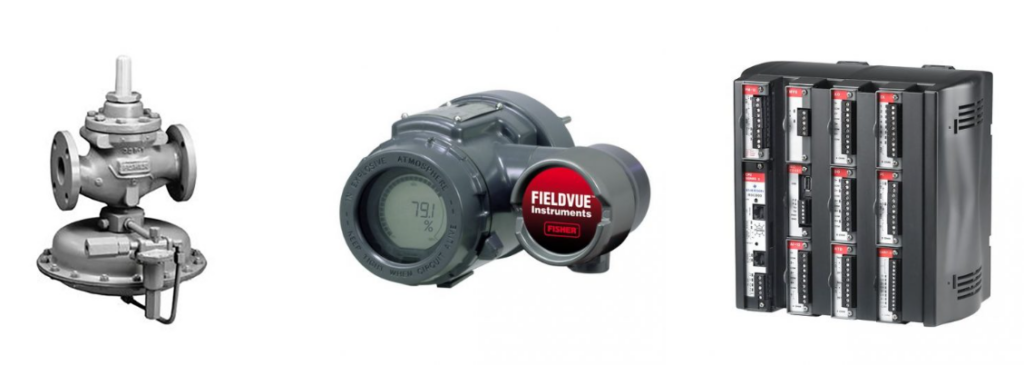
Emerson provides a complete industrial automation solution by covering the full control loop, from measurement to control and safety through to final control.
For Malaysia-based plants, this delivers practical outcomes: stable production, fewer unplanned stops, stronger quality consistency, and better compliance in demanding operating conditions.
In practice, it combines accurate instrumentation for real-time process data, resilient remote automation for distributed assets, and dependable final control elements that execute commands safely and consistently.
Emerson solutions generally fall into three core layers:
- Measurement Instrumentation: Sensors and transmitters that capture accurate, real-time data for control and quality.
- Control and Safety Systems: The control layer that processes signals, executes logic, and protects people, equipment, and production.
- Valves, Actuators, and Regulators: Final control elements that physically adjust flow, pressure, and process conditions to maintain setpoints.
For Malaysian manufacturers, this end-to-end approach reduces downtime, improves product repeatability, and supports compliance in demanding environments, from high-humidity sites to regulated sectors such as oil and gas, utilities, and process industries.
As automatic performance depends as much on implementation and support as on equipment, many local facilities choose Emerson through Transwater for a complete, locally delivered solution.
Transwater provides application-led engineering, commissioning, and lifecycle services that bring the full system together as an integrated engineering solution.
Want a clearer picture of end-to-end integration? Learn what integrated engineering solutions mean for operators in our article.
Key Benefits of Emerson Industrial Automated Systems
Emerson’s industrial automation control systems deliver practical advantages that directly impact operational performance, cost control, and long-term reliability.
These benefits matter most in Malaysian plants where uptime, quality consistency, and regulatory compliance are non-negotiable.
- Quantifiable Productivity Gains: According to longitudinal studies on Malaysia’s manufacturing sector, a 1% increase in automation density can lead to a 5.1% rise in productivity. High-precision instrumentation provides stable data for tighter control and improved batch consistency.
- Reduced Maintenance Costs: Digital asset monitoring can reduce labour and material costs. Diagnostics help teams spot drift and abnormal behaviour early, shifting operations from reactive “firefighting” to planned, data-driven maintenance.
- Shortened Turnaround Schedules: Implementing integrated automation can shorten maintenance schedules, minimising the duration of planned shutdowns and accelerating a return to full capacity.
- Faster Upgrades and Lower Deployment Costs: Wireless instrumentation can reduce installation time and costs by eliminating cabling and civil works. This is a vital advantage for Malaysian “brownfield” sites (existing facilities) looking to modernise without extensive downtime.
- Enhanced Competitive Edge: Adopting automated systems positions your facility as a market leader in “System-Led Reliability.”
How Emerson Solves Industrial Automation Challenges
Most implementation issues stem from three gaps in the control loop: measurement integrity, control integration, and equipment reliability.
Emerson addresses these through integrated measurement instrumentation, control and safety systems, and final control elements, delivered with local engineering support by Transwater.
Measurement Integrity in Harsh Operating Conditions
Most implementation issues stem from three gaps in the control loop: measurement integrity, control integration, and equipment reliability.
Emerson addresses these through integrated measurement instrumentation, control and safety systems, and final control elements, delivered with local engineering support by Transwater.
Integrated Control and Visibility Across Lines and Remote Assets
As plants expand, multiple lines, remote assets, or mixed systems can create visibility gaps and inconsistent control logic.
Emerson Remote Automation Solutions, including Remote Terminal Units (RTUs), flow computers, and SCADA, consolidate distributed assets into a unified operational view and standardise monitoring and control across sites.
Reducing Unplanned Downtime Through Diagnostics and Early Warning
Many stoppages begin as small, unnoticed issues in valves, actuators, or instrumentation that later trigger trips or quality deviations.
Emerson final control elements with built-in diagnostics, supported by reliable measurement, help detect degradation early so teams can schedule maintenance before failures interrupt production.
Evaluating Industrial Automation Control Systems for Your Facility
If you’re considering an upgrade or new implementation, here’s how to move forward:
1. Assess Your Current State
Document recurring issues: unplanned stops, quality deviations, high maintenance costs, or manual bottlenecks. These become your ROI baseline.
2. Define Your Automation Goals
Do you need better process control, asset reliability, regulatory compliance, or capacity expansion? Clear goals shape the right system architecture.
3. Request a Site Assessment
Transwater’s engineers can evaluate your existing infrastructure, identify quick wins, and recommend phased implementation paths that fit your budget and timeline.
4. Plan for Training and Change Management
New automation control systems work best when operators and technicians understand how to use diagnostic tools and respond effectively to automated monitoring alerts.
Emerson’s solutions by Transwater bridge the gap between advanced automation technology and practical, profitable implementation in Malaysian facilities, from instrumentation to automated monitoring.
Ready to Upgrade Your Industrial Automation?
Transwater: Your Local Industrial Automation Partner
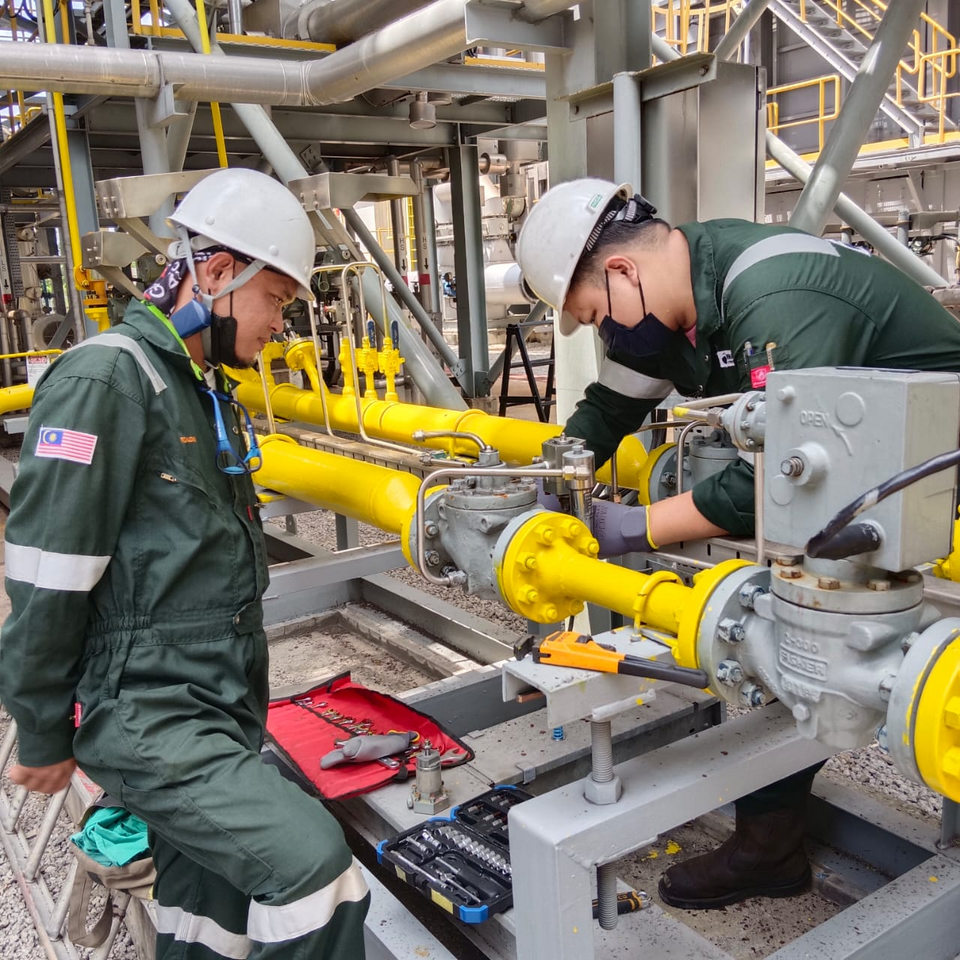
Industrial automation control systems integrate sensors, controllers, and final control elements to maintain stable processes, monitor equipment health, and deliver consistent output with minimal manual intervention.
For Malaysian industrial sectors facing rising labour costs and tighter quality standards, these automation control systems are foundational to competitiveness.
Emerson’s industrial solutions, from instrumentation to automated monitoring and final control, provide the reliability needed to reduce downtime, extend asset life, and meet near-zero-defect requirements.
Transwater is Emerson’s authorised solutions provider in Malaysia, delivering end-to-end implementation with local expertise.
Unlike offshore suppliers or product-only distributors, we combine Emerson’s global technology with on-ground consultation, commissioning, training, and long-term support across Peninsular and East Malaysia.
Why Work with Transwater
- Local presence and responsive support: Malaysia-based teams with regional operations across Peninsular and East Malaysia.
- Over 40 years of industry experience: Established in 1981 with long-standing industrial experience.
- Emerson local business partner: Application-led engineering support and lifecycle services from planning to commissioning.
- Recognised track record: Awards and recognitions, including PETRONAS- and Emerson-related programmes.
- Compliance-ready experience: PETRONAS vendor registration and licence holder since 1986, plus Health, Safety, Environment, and Security (HSES) recognition and ISO milestones.
Whether retrofitting legacy equipment or building new capacity, Transwater’s industrial automation control systems deliver measurable ROI through system-led reliability.
Ready to upgrade your facility? Contact Transwater today to explore how Emerson automation solutions can transform your operations.
Frequently Asked Questions
What is the definition of industrial automation control systems?
Industrial automation control systems consist of an integrated network of sensors, controllers (such as programmable logic controllers (PLCs) or RTUs), and final control elements (such as valves or actuators) that work together to automatically manage and optimise industrial processes, reducing the need for human intervention and increasing precision.
How does industrial automation affect my CIDB or PETRONAS license rating?
Implementing advanced control systems demonstrates technical maturity and compliance with modern safety standards, which can positively impact your scoring during license renewals and tender pre-qualifications.
Can I integrate Emerson sensors with my existing non-Emerson SCADA?
Yes. Emerson instrumentation uses open protocols such as Modbus and WirelessHART, enabling it to communicate with most third-party automation systems.
What is the standard lifespan of an Emerson control system?
With proper maintenance from Transwater, these systems are designed for 15 to 20 years of operation, with modular upgrade paths to keep the technology current.
What is the difference between an RTU and a standard PLC?
An RTU (Remote Terminal Unit) is designed specifically for remote locations with harsh environments and low power availability, whereas a PLC is generally used for high-speed logic within a factory building.
Can small manufacturers afford automation systems?
Yes. Industrial automation control systems are scalable, so SMEs can start small by automating key bottlenecks or high-risk processes instead of an entire plant.
Wireless instrumentation and modular control platforms enable phased upgrades at lower upfront cost.
In Malaysia, incentives such as MIDA support, tax deductions, and Industry 4.0 programmes can help offset costs.
How long does automation implementation take?
Implementation timelines vary based on project scope, but standard durations are:
- Small-scale upgrades (wireless sensors, single-line automated monitoring, valve retrofits): 2 to 6 weeks from assessment to commissioning
- Mid-scale implementations (SCADA integration, multi-line control, asset monitoring systems): 2 to 4 months, including design, installation, and training
- Full plant automation (greenfield or complete brownfield retrofit): 6 to 12 months, depending on complexity and existing infrastructure
Transwater’s phased approach allows you to implement automation controlling systems in stages, minimising disruption to ongoing production.